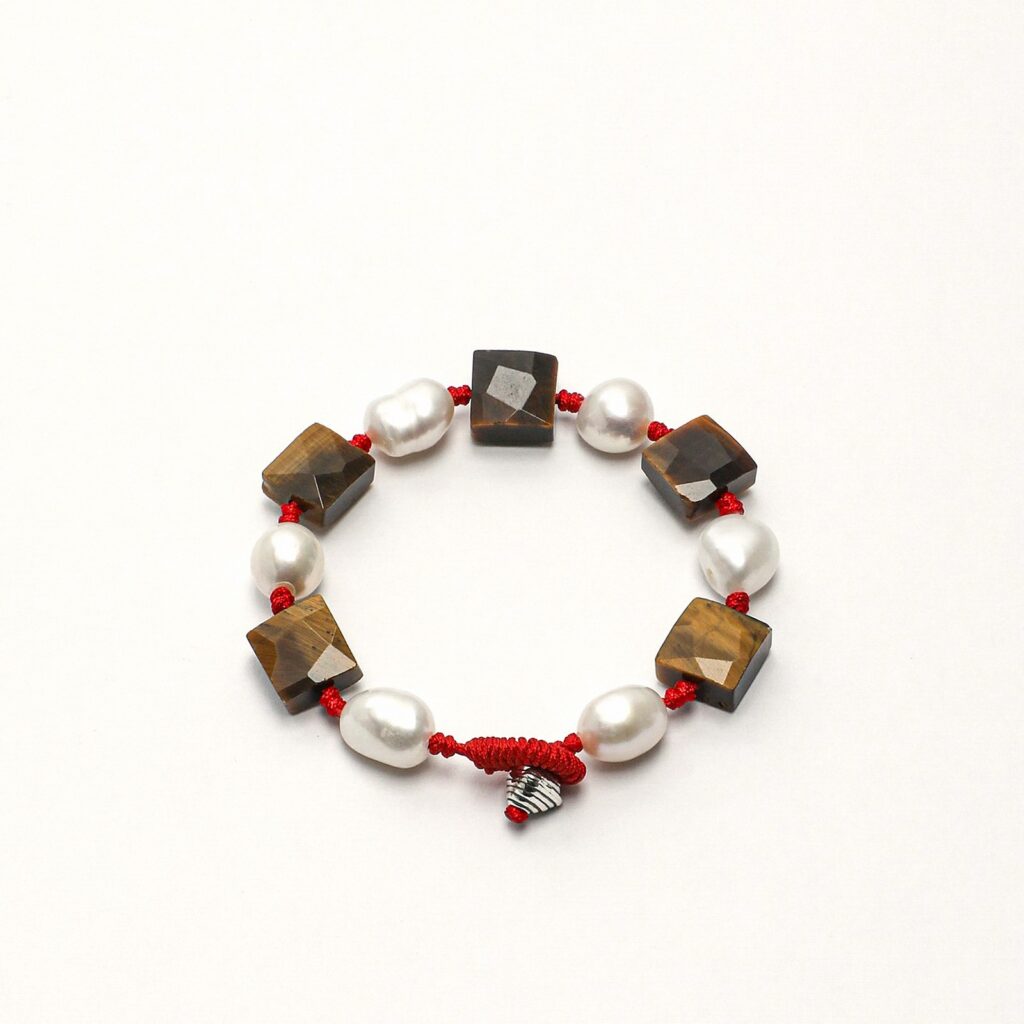
The difference between a baroque pearl and a freshwater pearl is shape, not species. Baroque describes an irregular, non-spherical pearl — it can be freshwater, Akoya, Tahitian or South Sea. Freshwater describes where the pearl grew: a mussel in a lake or river, most often in China. So a freshwater pearl can be round or baroque, and a baroque pearl can cost $15 or $1,500 depending on which oyster produced it and how thick its nacre is.
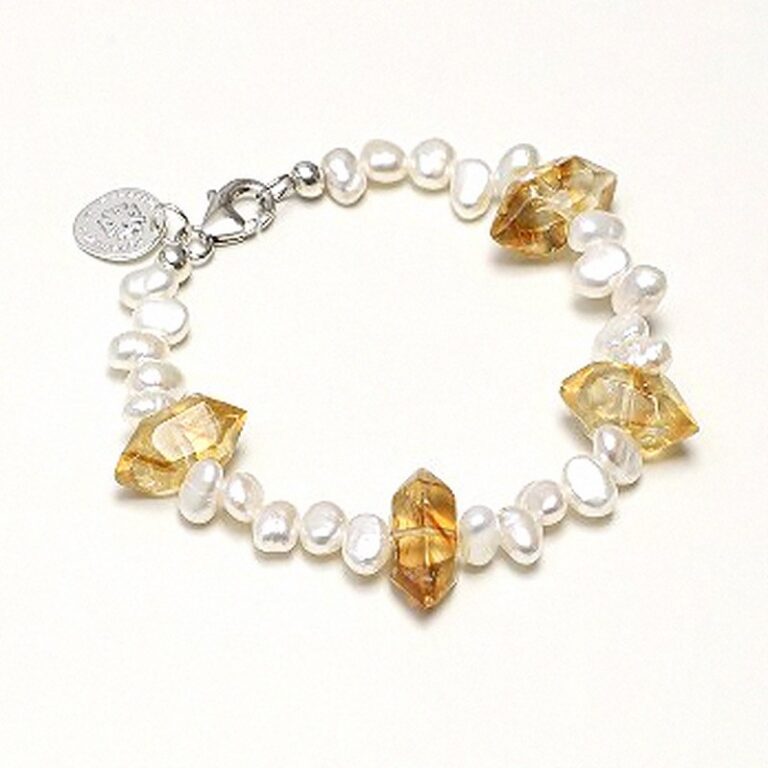
Baroque pearls, hand-strung. No two are the same shape — that irregularity is the grade, not a defect.
What “baroque” actually describes
Pearls grow in layers of nacre around a nucleus, and they rarely grow in perfect spheres. The trade sorts the results into shape grades: round, near-round, oval, button, drop, and baroque. Baroque is the catch-all for everything that will not fit a caliper — asymmetrical, lumpy, pinched, elongated, sometimes almost coin-shaped.
Two things follow from that definition. First, baroque is a shape word, so a baroque pearl is not a cheaper material or a defective one; it is a pearl that grew in a shape a round-pearl buyer would reject. Second, baroque is not a single look. A baroque Akoya is a small, sharp-lustred, irregular drop. A baroque South Sea is a fist-sized, satin-surfaced, sculptural piece. A baroque freshwater is what most affordable baroque jewelry is made from, and it is where most buyers start.
The word comes from the Portuguese barroco, used for irregular pearls long before it was used for a style of art. It has been a compliment in jewelry for about a century and a half; before that, gem dealers treated these pearls as waste.
What a freshwater pearl is
Freshwater pearls are cultured in Hyriopsis cumingii mussels, farmed in lakes and rivers — the bulk of the world supply comes from the Chinese provinces around Shanghai and Zhejiang. Each mussel can host dozens of pearls at once, which is why freshwater is the least expensive pearl type per piece and why shapes vary so widely.
Most freshwater pearls are tissue-nucleated: a small piece of mantle tissue is inserted, and the pearl grows almost entirely as nacre. That matters for durability. A solid-nacre pearl can be worn hard for decades without the bead showing through, which is not true of thin-nacre Akoya or South Sea pearls. Freshwater luster tends to be softer and more satin than the mirror-sharp luster of saltwater pearls, and the colour range is wider — white, cream, peach, pink, lavender, and dyed versions of all of them.
The one honest caveat: “freshwater” says nothing about shape. Freshwater pearls are graded round, near-round, oval, button and baroque just like saltwater ones, and a round freshwater strand costs several times what a baroque freshwater strand of the same size does.
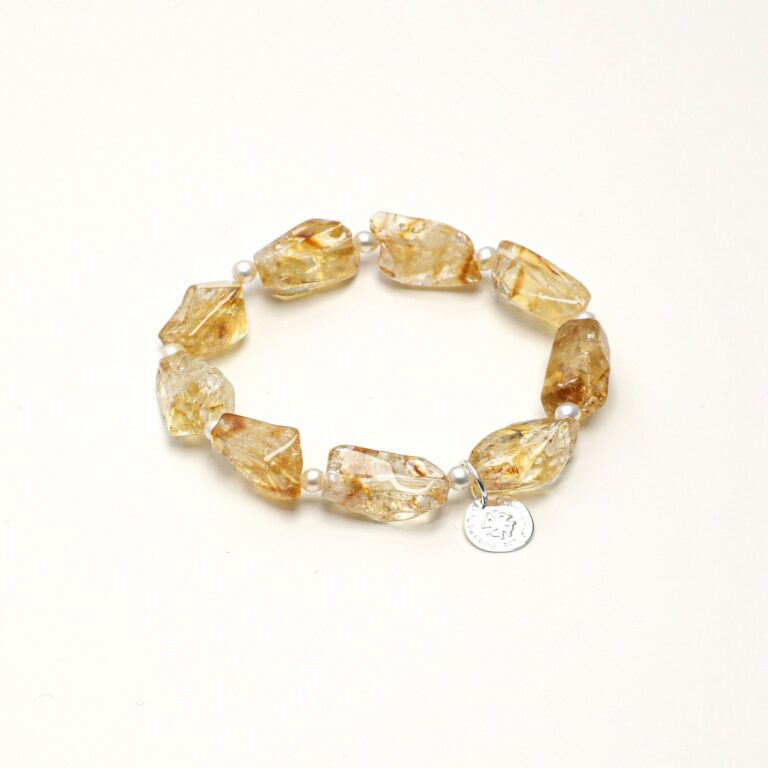
Round freshwater pearls. Roundness costs money because it forces matching: every pearl in the strand has to agree with its neighbours.
Side by side
| Baroque pearl | Freshwater pearl | |
|---|---|---|
| What it names | A shape grade | A growing environment |
| Shape | Irregular by definition | Anything from round to baroque |
| Typical size | 4–20 mm depending on type | 4–12 mm, most 6–9 mm |
| Nacre | Varies; often thick on freshwater | Usually solid nacre throughout |
| Luster | Softer, more diffuse | Satin, occasionally sharp |
| Matching | Hard; pairs are rare and priced up | Easy at round grades |
| Price feel | Cheaper per pearl, higher per design | Cheapest per pearl at round grades |
| Best for | Focal pieces, earrings, texture | Classic strands, daily wear |
Two practical notes before you choose. Freshwater pearl beads are usually sold between 6 mm and 10 mm, and at the same bracelet length a 10 mm strand sits noticeably heavier than an 8 mm one. Baroque strands are often knotted between pearls: the silk stops the irregular shapes from grinding against each other, which matters more here than in a round strand, because the high point of one baroque pearl can meet the high point of the next at a single spot. And if two strands cost the same, count the pearls — more pearls at the same length means smaller beads, which wear finer and cost less per pearl.
Why baroque is cheaper per pearl
A round pearl is only useful if its neighbours in a strand are equally round, equally sized and equally coloured. That matching process wastes most of a harvest, and the cost of the waste is built into the price of the few strands that survive. Baroque pearls skip that step: each pearl is used on its own terms, so almost nothing is discarded.
What changes at the high end is which oyster grew it and how big it got. A matched pair of large baroque South Sea pearls can cost more than a small round freshwater strand, because large baroque pearls with thick nacre and clean surfaces are genuinely scarce. The rule most buyers can rely on: baroque is cheaper than round at the same size and same type, and expensive when the size and the nacre are unusual.
Which one belongs in your jewellery box
The practical split comes down to how you wear it, not which is “better”.
— Choose baroque for texture and personality. Each pearl is one of a kind, which makes a baroque bracelet easy to wear with denim and knitwear and hard to mistake for something bought off a shelf. It also hides wear better: an irregular surface does not show a small scratch the way a perfect sphere does.
— Choose freshwater round for formality. A clean round strand reads as traditional jewellery and pairs with tailoring. If you want something that looks like the pearls you saw at a wedding, this is the shape you are remembering.
— Choose by set, not by piece. If you are building a set, baroque is easier to coordinate than most people expect: a baroque pearl bracelet does not need to match a necklace pearl for pearl, only in size range and tone. Matching round pearls across pieces is the expensive part. If you are building outward from a bracelet, pearl earrings are the easiest second piece, since a small pair needs far less matching than a necklace does.
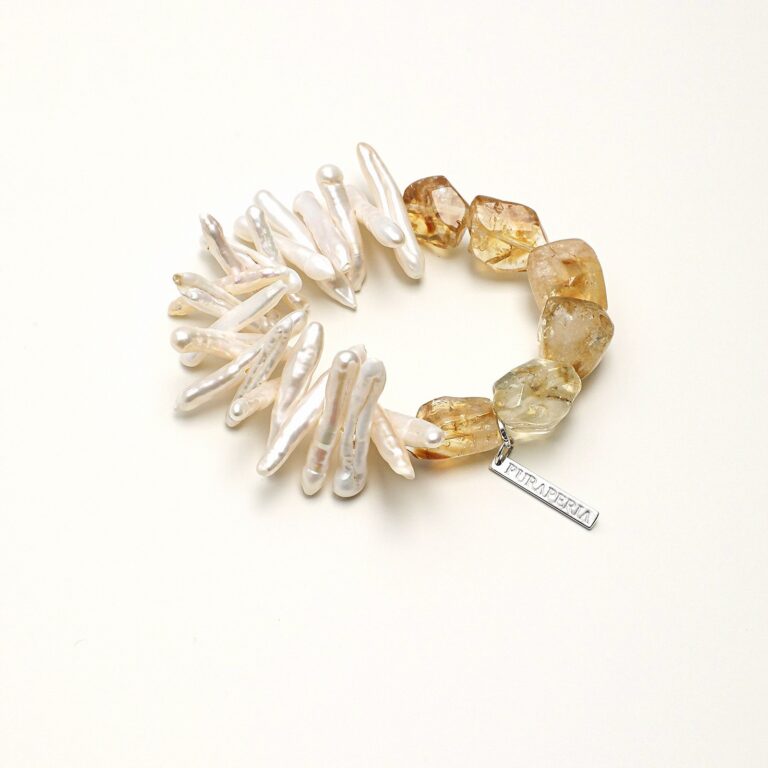
A golden baroque strand: the luster sits on the surface, so a phone photo at an angle shows more than a straight-on shot.
How to judge quality from a photo
Four things separate a good baroque pearl from a dull one, and all four survive a photograph:
— Luster over shape. Look for a bright, tight highlight on the pearl’s surface. A dull pearl with a pleasing shape will look flat in person; a sharp highlight means the nacre is dense.
— Clean surface. Small pits and spots are normal in freshwater pearls, but they should not cluster on the side that faces out when worn.
— Consistent size. In a strand, neighbouring pearls within about a millimetre of each other look intentional. A single pearl twice the size of its neighbours looks like a mistake.
— Honest colour talk. Natural freshwater colours are white, cream, peach, pink and lavender. Strong greens, blues and blacks in inexpensive pearls are dyed, and a listing that says so is a listing worth trusting. Every natural pearl is slightly different in tone and surface — that is the nature of the material, not a flaw.
Wearing and storing pearls
Pearls sit at 2.5–4.5 on the Mohs scale, softer than glass. Perfume, hairspray and chlorine dull the nacre over time, so pearls go on last when you are getting dressed and come off first at night. Wipe them with a dry soft cloth — not a polishing compound — and keep them in a cloth pouch rather than a sealed plastic bag, which traps moisture. If you wear a pearl bracelet daily, have it restrung every few years before the silk or elastic stretches enough to leave gaps. For the rest of your stack, see our bracelet collection; the same softness rule applies to any strand worn next to pearls.
Questions we get about both types
Is a baroque pearl a real pearl?
Yes. Baroque is a shape grade, not a material. A baroque pearl has the same nacre as a round one; it simply grew asymmetrically. Imitation pearls are a separate category and are usually too uniform to pass as baroque.
Are baroque pearls always cheaper?
Cheaper than round pearls of the same type and size, usually. Not cheaper in absolute terms: a large baroque South Sea pearl costs far more than a small round freshwater one.
Do freshwater pearls last longer than saltwater ones?
Usually, yes, because most freshwater pearls are solid nacre rather than a thin layer over a bead. They resist chipping and wear better in everyday jewellery. All pearls still need the same care.
Can I wear a baroque pearl bracelet every day?
Yes, with the usual precautions: take it off before showering, swimming and applying perfume, and avoid knocking it against metal watch bands. Pearls are soft, and a bracelet worn daily is the piece most likely to show scuffs first.
How do I tell dyed pearls from natural ones?
Dyed pearls often show colour concentrated in surface cracks and have a tone that looks too even across the strand. Natural freshwater colour is uneven pearl to pearl, softer, and usually in the white, cream, peach, pink or lavender family. A seller who names the treatment is the one to buy from.
Every pearl is a natural product and each piece is unique — expect small differences in shape, tone and surface from the photograph. Orders over $75 ship free within the US, and returns are accepted within 30 days.